Content Collaboration - Discovery & Early Vision
HubSpot’s new Content (CMS) Product Group suspected that many users struggled to find effective ways to collaborate with their work teams on marketing and customer support content (i.e. web pages, landing pages, blog posts and knowledge base articles), based on customer feedback.
Our product was originally designed for small companies with a marketing team of one. As HubSpot and our clients grew, we began to support much larger marketing and support teams, who must coordinate with each other on creating, reviewing, approving and managing content.
We hoped to get a better picture of teams' collaborarative process, and pain points. Based on the patterns that emerged, we hoped to uncover ways to drive adoption of our CMS tools through simple and compelling collaboration features.

Objectives & Constraints
The Director of Product for our group asked for insights within 6-8 weeks. She hoped to have insights to share by that point, along with rough designs for potential collaboration features, with partners and stakeholders.
We refined our exploratory research questions to understand:
The context in which people collaborate on marketing/support content
Examples of collaboration, within a company and with outside contractors
Pain points and frustrations
Opportunities for making collaboration easier
Types of users involved in publishing content
Tools and processes currently used
How collaborative approaches change as companies grow

Methods
Review existing internal research
Internal interviews - HubSpotters who collaborate on marketing or support content
Customer interviews (followed by synthesis with affinity mapping)
Contextual inquiry & in-person interviews in the EU/UK

My role
Planned and lead research project
Mentored an aspiring researcher
Co-synthesized findings with members of the product team
Collaborated on concept ideation, based on research findings
Collaborated on participant recruitment & screening
01
Research review
After reviewing write ups of past studies, I set up calls with the UX researchers who lead relevant projects.
We benefitted from a study that broadly examined collaboration among marketers (not specifically on content), including what they value most from collaboration methods and tools.
Another project served as a valuable reminder that “HubSpot is not the center of all of our customers’ work processes and software ecosystems, but that is okay. We can add value for our customers by becoming a platform that both acknowledges and seamlessly integrates our users’ preferred ‘sandboxes’ for content creation and data storage.”
HubSpot is not the center of the universe for all of our customers.
02
Internal Interviews
I also conducted semi-structured interviews with 4 HubSpotters from our Marketing and Knowledge Base teams, to understand how we collaborate internally on creating public-facing content. This gave us a baseline to refine our questions for users of our product, as well how collaboration “in the wild” may differ from patterns we see within our own company.
03
Recruiting participants
The Product Manager and I collaborated closely on a recruitment strategy for remote interviews. We considered using multiple sources - including the a user forum for product ideas, customer service tickets, sales call data, and usage analytics for content features. I took a more hands-off approach than usual to gathering the data needed to invite users, leaving it with the Product Manager while I was out of the office on a work trip.
After sending out an invite, we screened user responses and recruited a dozen customers who collaborate on creating marketing and/or customer service content. We took care to recruit from a variety of company sizes, world regions, and roles in respect to content (ie. drafting, reviewing, editing, approving and publishing).
04
Mentoring on Interview Methods
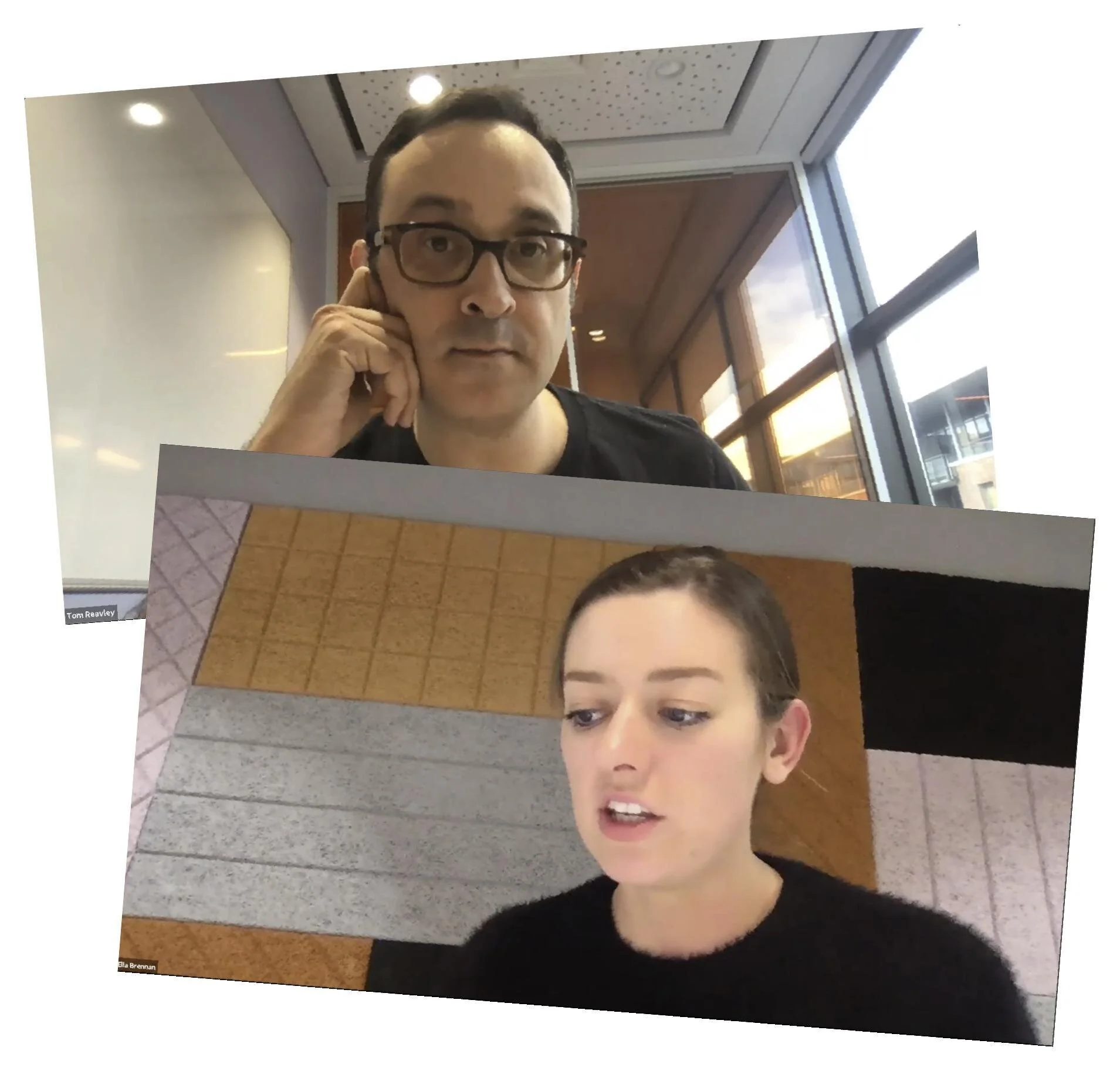
Ella, originally from HubSpot Customer Support, pitched in at all stages of this project in order to get some UX Research experience. We reviewed basic interviewing technique, and after she observed several foundational interviews with customers, I let her conduct some herself.
She was able to develop considerable foundational research skills and confidence over the course of the project.
05
Co-Synthesis
Ella and I re-listened to all of the recordings from customer interviews and captured observations and quotes on sticky notes.
The Product Manager and Designer joined us to cluster these data points using a multi-step, affinity mapping process. I set time limits for each phase, punctuated with conversation about the groupings, and breaks to help us stay focused.
…Not everything went to plan, of course. We ended up needing more time than originally planned for synthesis.
06
Insights & Surprises
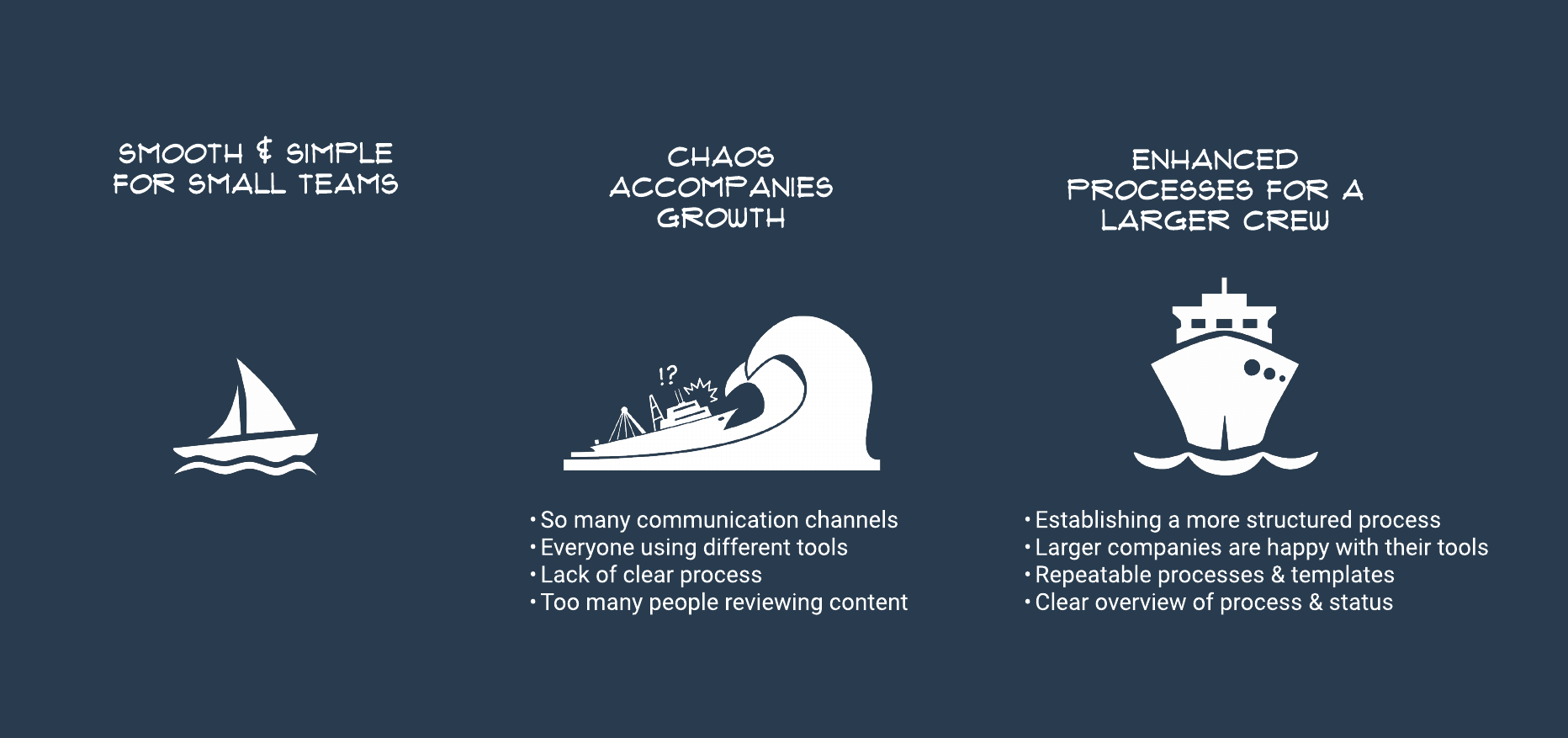
A clear pattern emerged: collaborative efforts get rockier when teams are in the midst of a growth spurt. What worked for a very small team no longer works as more people become involved. Often, problems arise from a lack of clear process, common software tools, too many communication channels and too many people becoming involved in review of content.
However, once a large team has established itself, they greatly streamline the collaboration process. Before this research, we had assumed that collaboration features would appeal the most to our Enterprise level customers, but that was not the case. Large teams and companies were fairly happy with the toolsets, and wary of the cost of switching. Such customers would be better served by HubSpot continuing to expand integrations with other systems.
It turned out that small to mid-size business approaching a growth phase were much more likely to benefit from content collaboration features within HubSpot (such as commenting, assignment, approvals, lightweight task boards, project templates and calendaring). We predicted that early adoption by mid-size businesses would result in continued usage as those companies moved to Enterprise level.
06
Ideation & Co-Presentation
The Product Designer ran an ideation workshop, based on our insights, generating some early solution concepts. We were able to package our research findings together with user stories and first-round concepts in a single presentation, which four of us lead.
The cohesive narrative of problem > research findings > solutions concepts within a user scenario was compelling and memorable for stakeholders. Additionally, hearing from people in different functional roles helped us draw more attention to the work.

07
Sudden changes
The COVID-19 pandemic hit Ireland. Offices closed and travel became impossible, so we cancelled the contextual inquiry and in-person interviews phase that we had planned.
A week later, there was a major re-organization of product groups to support HubSpot’s current business priorities. My collaborators and I moved to different new product groups, with new projects to look after.
Happily, we were able to hand off our deliverables to a new team, dedicated to improving orchestration and collaboration for marketing teams.
Outcomes

Roadmap for future work
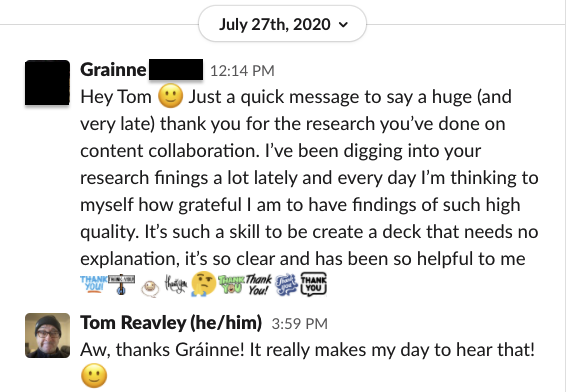
The Marketing Orchestration team leaned heavily on our work, which inspired the rollout of new features and proposal for a high-level company goal in late 2020-early 2021. The team relied on our outline of needs based on team sizes, our overview of existing software solutions that teams had implemented, and existing frictions for teams collaborating within HubSpot.

New collaboration features SHIPPED
The new Marketing Tasks feature was heavily influenced by our research, with more enhancements to come.
Our findings and early concepts also influenced the introduction of commenting features, a redesign of the Marketing Calendar view, and a collaboration sidebar.
The research also contributed to development of a feature that allows review and approval of marketing emails, with more complex content review and approval features planned.

A NEW UX COLLEAGUE
Soon after the project, Ella was accepted in to HubSpot’s UX Rotational Program (an entry-level training program for aspiring UX Designers and Researchers). She used this project as a portfolio piece.